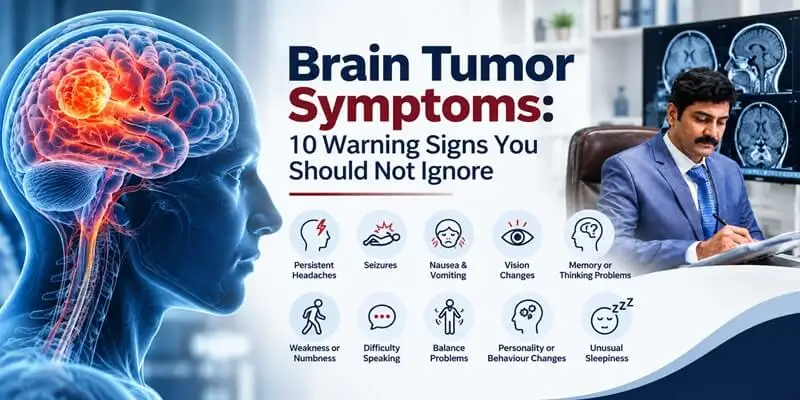
Brain Tumor Symptoms: 10 Warning Signs You Should Not Ignore
Brain tumors can affect different parts of the brain and may cause symptoms depending on their location, size, and growth pattern. Some symptoms may develop gradually, while others, such as seizures, can appear suddenly. Importantly, having one of these symptoms does not necessarily mean that a person has a brain tumor, as many of the same symptoms can occur due to other medical conditions.
Recognizing persistent, unusual, or worsening neurological symptoms can help you seek appropriate medical evaluation at the right time.
What Is a Brain Tumor?
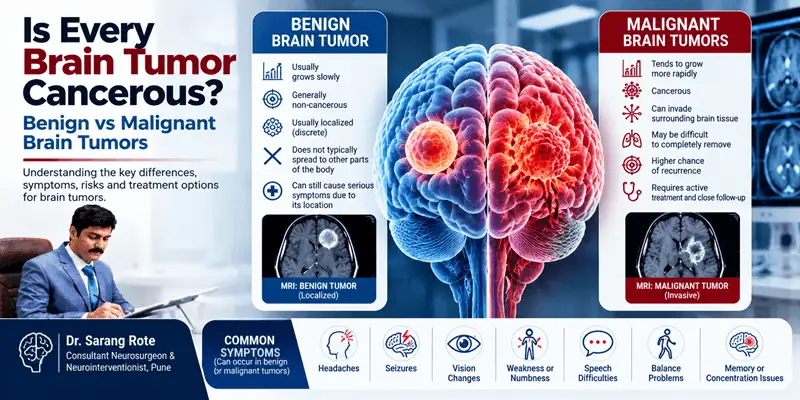
A brain tumor is an abnormal growth of cells within the brain or surrounding structures. Brain tumors can be benign (non-cancerous) or malignant (cancerous). Even a benign tumor can cause significant problems if it grows in an area that controls important functions or puts pressure on surrounding brain tissue.
The symptoms of a brain tumor are not the same for everyone. They can vary according to where the tumor develops, how large it is, and which part of the brain is affected.
10 Warning Signs of a Brain Tumor
1. Persistent or Worsening Headaches
Headaches are common and are usually caused by conditions other than brain tumors. However, a headache that is new, persistent, increasingly severe, or associated with other neurological symptoms should be evaluated by a medical professional.
Some headaches related to brain tumors may be worse in the morning or may occur along with nausea, vomiting, vision changes, weakness, or other neurological symptoms.
2. Seizures
A seizure can sometimes be the first noticeable symptom of a brain tumor. Seizures may cause uncontrolled movements, unusual sensations, changes in awareness, or temporary changes in behaviour.
A new-onset seizure, particularly in someone who has never experienced seizures before, requires medical evaluation to determine the underlying cause.
3. Nausea and Vomiting
Frequent or unexplained nausea and vomiting can sometimes occur with brain tumors, particularly when increased pressure develops inside the skull.
Nausea and vomiting alone are not specific to brain tumors and can have many other causes. However, when they occur repeatedly with headaches, vision problems, balance difficulties, or other neurological symptoms, medical evaluation is important.
4. Changes in Vision
Brain tumors can affect areas involved in vision or put pressure on structures associated with eyesight. Possible symptoms include blurred vision, double vision, loss of part of the visual field, or other changes in vision.
New or unexplained vision changes should not be ignored, especially when they occur along with headaches or other neurological symptoms.
5. Weakness or Numbness
A brain tumor affecting areas responsible for movement or sensation may cause weakness or numbness in part of the body. These symptoms may sometimes be more noticeable on one side.
Sudden or progressive weakness or numbness should receive prompt medical attention because several neurological conditions can cause these symptoms.
6. Difficulty Speaking or Understanding
Changes in speech or language can occur when a tumor affects areas of the brain involved in communication.
A person may experience difficulty finding the right words, speaking clearly, understanding language, reading, or communicating normally. New or progressive language difficulties should be assessed by a healthcare professional.
7. Problems With Balance or Walking
A brain tumor affecting areas involved in coordination and balance may cause difficulty walking, unsteadiness, dizziness, or problems with coordinated movements.
If balance problems are persistent, progressively worsening, or accompanied by other neurological symptoms, a medical evaluation can help identify the underlying cause.
8. Memory, Concentration or Thinking Problems
Some brain tumors may affect cognitive functions such as memory, concentration, thinking, or the ability to perform familiar tasks.
A person may notice unusual forgetfulness, difficulty concentrating, confusion, or problems carrying out everyday activities. Persistent or progressive changes should be discussed with a doctor.
9. Personality or Behaviour Changes
Changes in personality, mood, behaviour, or emotional responses can sometimes occur when a tumor affects particular areas of the brain.
Family members may notice changes before the person recognizes them. Unexplained and persistent changes in behaviour, personality, or mood should be evaluated, particularly when accompanied by other neurological symptoms.
10. Unusual Sleepiness or Changes in Alertness
Brain tumors can sometimes cause unusual drowsiness, reduced alertness, or changes in normal activity levels. These symptoms may occur because of the effects of the tumor itself or increased pressure within the skull.
Persistent or unexplained changes in alertness should be evaluated, particularly when they occur with headaches, vomiting, seizures, weakness, or other neurological symptoms.
When Should You See a Neurosurgeon?
Not every headache, episode of dizziness, or memory problem indicates a brain tumor. Many common conditions can produce similar symptoms. However, symptoms that are new, persistent, progressive, severe, or occurring together deserve appropriate medical assessment.
A medical evaluation may include a detailed medical history, neurological examination, and, when appropriate, brain imaging or other diagnostic tests. The exact investigations depend on the symptoms and clinical findings.
If a person experiences a new seizure, sudden weakness, sudden difficulty speaking, sudden vision loss, or another sudden severe neurological symptom, urgent medical attention is appropriate.
How Are Brain Tumors Diagnosed?
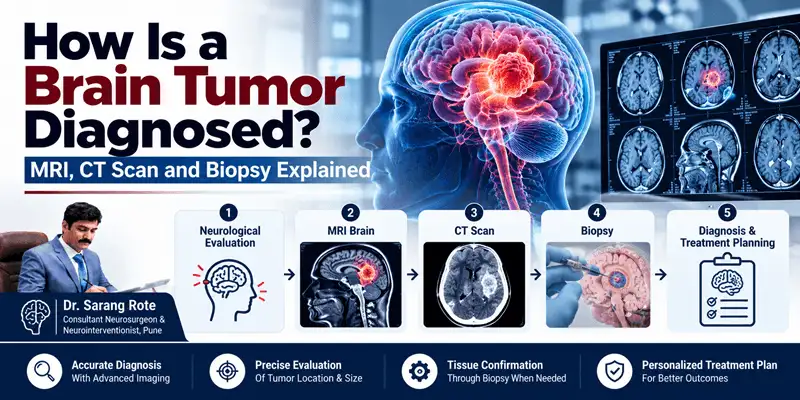
Diagnosis begins with understanding the patient's symptoms, medical history, and neurological examination. Depending on the clinical findings, doctors may recommend imaging tests such as MRI or other investigations.
In some cases, a biopsy may be required to determine the exact type of tumor. The appropriate diagnostic approach depends on the suspected tumor, its location, and the individual patient's condition.
Brain Tumor Treatment Depends on the Individual Patient
There is no single treatment that is suitable for every brain tumor. Treatment depends on factors such as the type of tumor, its location, size, growth characteristics, symptoms, and the patient's overall condition.
Depending on the situation, treatment may involve observation and regular imaging, surgery, radiation therapy, medicines, or a combination of approaches. A neurosurgical evaluation helps determine the appropriate treatment strategy for patients who may require surgical management.
Why Choose Dr. Sarang Rote for Brain Tumor Evaluation and Treatment?
Dr. Sarang Rote is a Consultant Neurosurgeon and Neurointerventionist in Pune. His website lists brain tumor surgery, skull base neurosurgery, endoscopic neurosurgery, and complex brain tumors among his areas of expertise and services.
His professional profile also describes training and experience in minimally invasive endoscopic brain and skull base neurosurgery, cerebrovascular neurosurgery, and complex brain tumors.
For patients experiencing persistent or unexplained neurological symptoms, a detailed consultation can help determine whether further neurological evaluation or imaging is required.
Takeaway
Brain tumor symptoms can vary widely from one person to another. Persistent headaches, seizures, vision changes, weakness or numbness, speech difficulties, balance problems, cognitive changes, personality changes, nausea and vomiting, and unusual sleepiness can occur with brain tumors, although these symptoms can also have many other causes.
The important thing is not to panic when you notice one symptom, but to pay attention to symptoms that are persistent, worsening, unusual, or occurring together. Timely medical evaluation can help identify the cause and guide appropriate treatment.
If you or someone in your family is experiencing persistent or unexplained neurological symptoms, consult a qualified neurosurgeon for an appropriate evaluation.


















.jpeg)