Spinal Cord Compression: Symptoms, Causes and Treatment
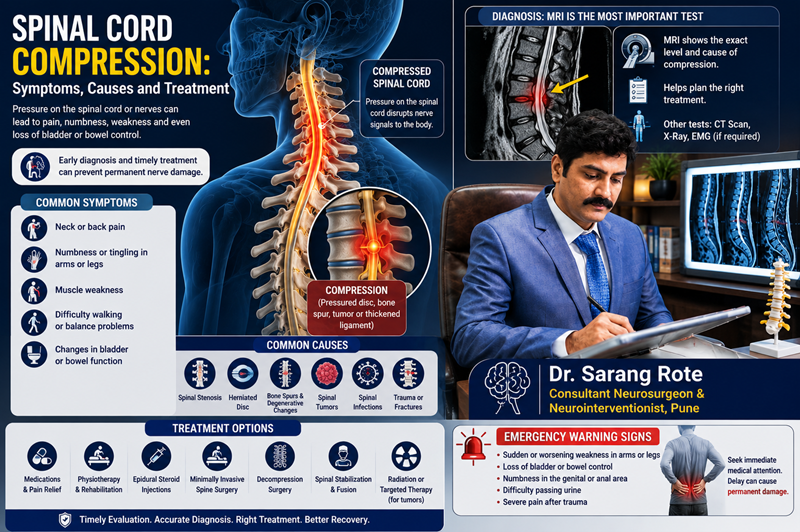
The spinal cord is a vital part of the nervous system that carries messages between the brain and the rest of the body. It is protected by the bones of the spine, but several conditions can cause pressure on the spinal cord or the nerves around it.
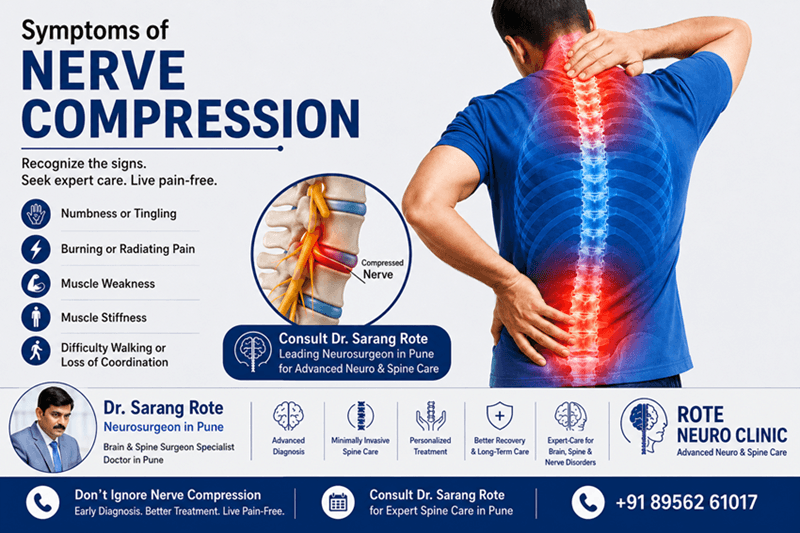
Spinal cord compression occurs when something reduces the space around the spinal cord and puts pressure on it. Depending on the location and severity of the compression, a person may develop pain, numbness, tingling, weakness, difficulty walking, balance problems or changes in bladder and bowel function.
The condition can develop slowly over time or occur suddenly following trauma, infection or another serious problem. Early recognition is important because prolonged or severe compression can result in permanent neurological problems.
What Is Spinal Cord Compression?
Spinal cord compression occurs when the spinal cord or nearby nerve structures are squeezed by an abnormal or degenerative process.
The spinal cord travels through the spinal canal, which is formed by the vertebrae of the spine. Normally, there is sufficient space around the spinal cord and nerves.
When this space becomes reduced, pressure can develop on the spinal cord.
The symptoms depend largely on:
- The level of the spine affected
- The cause of compression
- How severe the compression is
- How quickly the compression develops
- Whether the spinal cord or individual nerve roots are affected
Compression in the neck may affect the arms, hands, legs and walking, while compression lower in the spine may primarily affect the legs and bladder or bowel function.
What Causes Spinal Cord Compression?
Spinal cord compression can have many causes.
Common causes include:
- Age-related degeneration of the spine
- Spinal stenosis
- Herniated or bulging discs
- Bone spurs
- Thickened spinal ligaments
- Spinal tumors
- Cancer that has spread to the spine
- Spinal infections
- Spinal trauma or fractures
- Abnormal spinal alignment
- Certain inflammatory or bone conditions
The cause needs to be identified because treatment depends heavily on what is producing the compression.
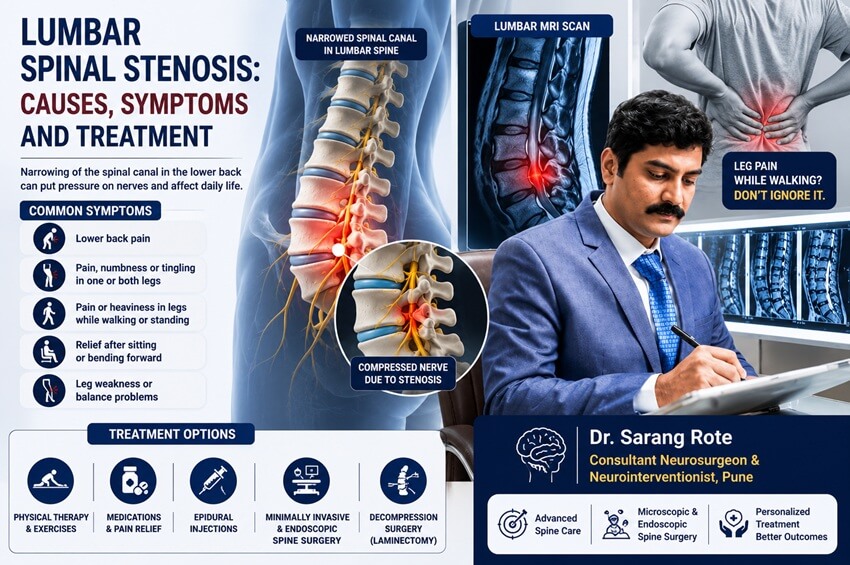
Spinal Stenosis
Spinal stenosis occurs when the spaces within the spine become narrower.
This narrowing can place pressure on the spinal cord or nerves.
It is commonly associated with age-related changes such as:
- Arthritis
- Bone spurs
- Disc degeneration
- Herniated discs
- Thickened ligaments
Spinal stenosis can affect the neck or lower back and may cause pain, numbness, weakness or difficulty walking.
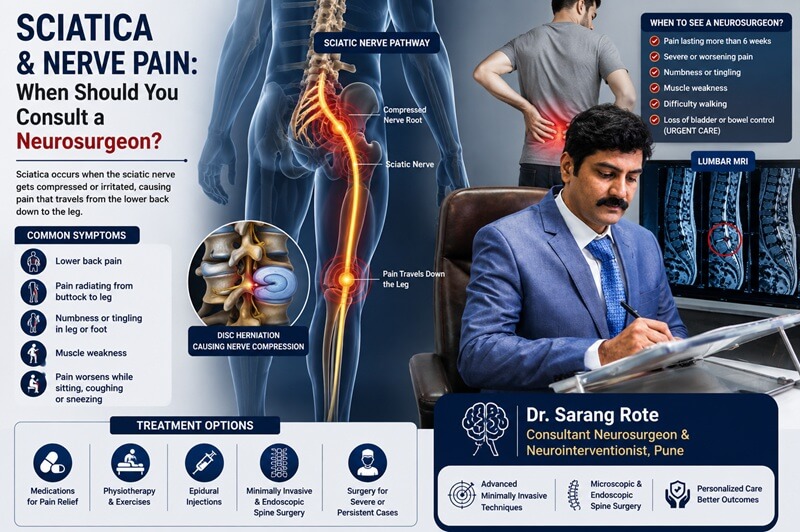
Herniated Disc
The discs between the vertebrae act as cushions.
When a disc becomes damaged, part of its inner material can protrude through the outer layer.
A herniated disc may press against the spinal cord or nearby nerve roots.
Depending on its location, this can cause:
- Back or neck pain
- Arm or leg pain
- Numbness
- Tingling
- Muscle weakness
Not every herniated disc causes symptoms.
Bone Spurs and Degenerative Changes
As the spine ages, arthritis and other degenerative changes can cause extra bone growth known as bone spurs.
These bony growths can reduce the available space within the spinal canal or around the nerve roots.
Over time, this may contribute to spinal cord or nerve compression.
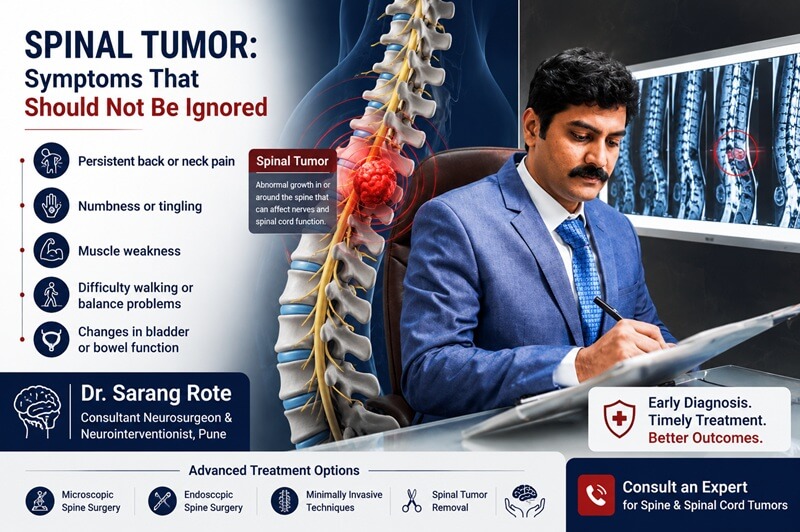
Spinal Tumors
A tumor can develop in or around the spinal cord or spine and gradually place pressure on the spinal cord or nerves.
Spinal tumors may be benign or malignant.
Tumors can cause:
- Persistent back or neck pain
- Pain that becomes worse over time
- Numbness
- Weakness
- Difficulty walking
- Balance problems
- Bladder or bowel changes
A spinal tumor may require urgent evaluation when it causes neurological deterioration.
Cancer Spread to the Spine
Cancer from another part of the body can sometimes spread to the bones of the spine and cause spinal cord compression.
This is particularly important in people with a current or previous history of cancer.
Symptoms that can raise concern include:
- Progressive back pain
- Severe persistent pain
- Night pain
- Pain made worse by movement or straining
- Weakness
- Numbness
- Difficulty walking
- Bladder or bowel problems
In a person with known or suspected cancer, symptoms suggesting spinal cord compression should be treated as an oncological emergency.
Spinal Infection
Infections involving the spine or tissues around it can sometimes cause swelling, inflammation or an abscess that puts pressure on the spinal cord.
Possible symptoms may include:
- Back or neck pain
- Fever
- Weakness
- Numbness
- Difficulty walking
- Other signs of infection
Spinal infection with neurological symptoms requires prompt medical assessment.
Spinal Trauma
Accidents, falls and other injuries can fracture or displace spinal bones.
Trauma can directly damage the spinal cord or cause swelling and instability that produces additional compression.
Acute spinal cord compression after significant trauma requires emergency medical evaluation.
Symptoms of Spinal Cord Compression
The symptoms of spinal cord compression depend on the level and severity of compression.
Common symptoms include:
- Neck or back pain
- Pain radiating into the arms or legs
- Numbness
- Tingling
- Muscle weakness
- Difficulty walking
- Balance problems
- Loss of coordination
- Changes in sensation
- Muscle stiffness or spasms
- Changes in bladder or bowel function
Symptoms may develop gradually or progress rapidly depending on the underlying cause.
1. Neck or Back Pain
Pain is often one of the first symptoms of a spinal problem.
The pain may be:
- Localised to the neck or back
- Persistent
- Sharp or aching
- Burning
- Radiating into the arms or legs
- Worse with certain movements
Persistent pain accompanied by neurological symptoms should not be ignored.
2. Numbness and Tingling
Compression of the spinal cord or nerves can interfere with normal sensation.
A person may experience:
- Numbness
- Tingling
- Pins-and-needles
- Burning sensations
- Reduced sensitivity to touch
- Changes in temperature or pain sensation
The distribution of these symptoms can provide clues about the location of the neurological problem.
3. Muscle Weakness
Weakness can occur when pressure affects the nerve pathways responsible for movement.
Patients may notice:
- Weakness in the arms
- Weakness in the legs
- Difficulty gripping objects
- Difficulty climbing stairs
- Trouble standing from a chair
- Frequent tripping
- Difficulty lifting the foot
Progressive weakness should receive prompt medical evaluation.
4. Difficulty Walking
Spinal cord compression can affect the pathways responsible for movement and coordination.
A person may develop:
- Unsteady walking
- Short or stiff steps
- Frequent falls
- Difficulty climbing stairs
- Reduced walking endurance
- A feeling that the legs are heavy
Walking difficulties can be particularly important when they are new or progressively worsening.
5. Balance and Coordination Problems
Compression of the spinal cord, especially in the cervical spine, can affect coordination and balance.
Patients may notice:
- Difficulty walking in a straight line
- Frequent stumbling
- Difficulty turning
- Problems with fine hand movements
- Difficulty writing
- Difficulty buttoning clothes
- Dropping objects
These symptoms should be evaluated when they persist or worsen.
6. Changes in Bladder or Bowel Function
Changes in bladder or bowel function can indicate significant neurological compression.
Possible symptoms include:
- Difficulty starting urination
- Difficulty emptying the bladder
- Loss of bladder control
- New urinary changes
- Loss of bowel control
- Difficulty controlling bowel movements
These symptoms, especially when accompanied by weakness or numbness, require urgent medical evaluation.
7. Muscle Stiffness and Spasms
Some people with spinal cord compression may develop muscle stiffness, tightness or spasms.
These symptoms can occur because pressure on the spinal cord affects the pathways that control muscle movement.
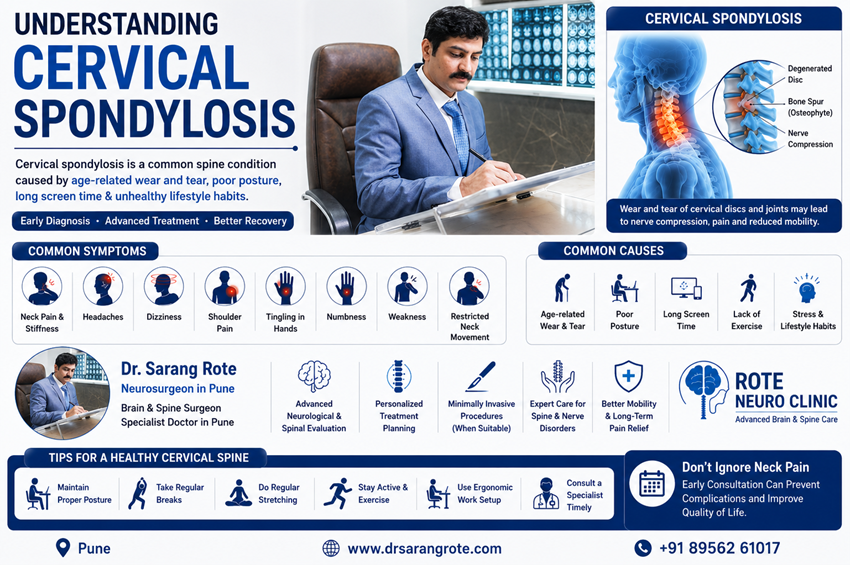
Cervical Spinal Cord Compression
Compression in the neck is particularly important because the cervical spinal cord carries nerve pathways to both the arms and legs.
Possible symptoms include:
- Neck pain
- Arm pain
- Hand numbness
- Tingling
- Hand weakness
- Difficulty with fine movements
- Leg stiffness or weakness
- Balance problems
- Difficulty walking
- Bladder or bowel changes
Cervical spinal cord compression may develop gradually, particularly when caused by degenerative changes.
Thoracic Spinal Cord Compression
Compression in the middle portion of the spine may produce symptoms affecting the trunk and legs.
Possible symptoms include:
- Mid-back pain
- Numbness around the chest or abdomen
- Leg weakness
- Walking difficulties
- Balance problems
- Changes in bladder or bowel function
Because thoracic spinal cord problems can sometimes be difficult to recognise initially, persistent neurological symptoms should be assessed.
Lumbar and Cauda Equina Compression
The lower part of the spinal canal contains nerve roots called the cauda equina.
Severe compression of these nerves can cause a serious neurological emergency.
Warning signs include:
- Severe lower back pain
- Leg weakness
- Numbness around the buttocks or genital region
- Difficulty passing urine
- Urinary retention
- Loss of bladder control
- Loss of bowel control
These symptoms require immediate medical attention.
When Is Spinal Cord Compression an Emergency?
Spinal cord compression can become an emergency when neurological function is deteriorating rapidly.
Seek immediate medical attention if you develop:
- Sudden or rapidly worsening weakness
- New difficulty walking
- Loss of bladder control
- Difficulty passing urine
- Loss of bowel control
- New numbness around the genital or anal region
- Severe or rapidly worsening neurological symptoms
- Severe symptoms after a spinal injury
In patients with known or suspected cancer, new symptoms of spinal cord compression should be treated as an oncological emergency.
How Is Spinal Cord Compression Diagnosed?
Diagnosis begins with a detailed medical history and neurological examination.
The doctor may assess:
- Muscle strength
- Reflexes
- Sensation
- Coordination
- Walking
- Balance
- Hand function
- Bladder and bowel symptoms
- Location and pattern of pain
Imaging is usually required to identify the cause and exact location of compression.
MRI for Spinal Cord Compression
MRI is one of the most important imaging tests for evaluating the spinal cord.
It can show:
- Spinal cord compression
- Disc herniation
- Spinal stenosis
- Tumors
- Infection
- Swelling
- Changes in the spinal cord
- Nerve compression
MRI can help doctors understand the severity and location of compression and guide treatment planning.
For suspected spinal cord compression caused by cancer, urgent MRI-based assessment is recommended within appropriate emergency pathways.
CT Scan
CT scans provide detailed images of the bones of the spine.
CT can help identify:
- Fractures
- Bone destruction
- Bone spurs
- Spinal alignment problems
- Certain tumors
- Structural abnormalities
CT may be especially useful after trauma or when detailed information about the bony structures is required.
X-Ray
X-rays may provide information about:
- Spinal alignment
- Fractures
- Degenerative changes
- Certain bone abnormalities
However, X-rays do not provide the same detailed information about the spinal cord and soft tissues as MRI.
Additional Tests
Depending on the suspected cause, doctors may recommend additional investigations.
These can include:
- Blood tests
- CT angiography in selected vascular conditions
- Biopsy when a tumor is suspected
- Infection-related testing
- Electromyography and nerve conduction studies in selected cases
The investigations depend on the patient's symptoms and suspected cause.
Treatment of Spinal Cord Compression
Treatment depends on the cause, location and severity of compression.
Possible treatments include:
- Observation in selected stable cases
- Medicines
- Physical therapy in appropriate chronic conditions
- Steroid treatment in selected emergency conditions
- Radiation therapy for certain tumors
- Antibiotics for certain infections
- Surgical decompression
- Spinal stabilisation
- Minimally invasive procedures in selected cases
The priority in significant compression is to identify and address the underlying cause before permanent neurological damage occurs.
Conservative Treatment
Not every case of spinal compression requires immediate surgery.
For selected chronic degenerative conditions without progressive neurological deficits, doctors may initially recommend:
- Physical therapy
- Appropriate exercises
- Activity modification
- Pain management
- Posture correction
- Regular neurological follow-up
However, conservative treatment is not appropriate for every cause of spinal cord compression.
Rapidly progressive weakness, severe neurological symptoms or compression caused by certain tumors, infections or trauma may require urgent intervention.
Medicines
Medicines may be used depending on the underlying cause.
Treatment can include medicines for:
- Pain
- Nerve-related symptoms
- Inflammation
- Muscle spasms
- Infection
- Certain tumors
In some emergency situations involving tumor-related spinal cord compression, corticosteroids may be used to reduce swelling around the spinal cord while definitive treatment is arranged.
Medication selection should always be determined by the treating medical team.
Surgery for Spinal Cord Compression
Surgery may be required when the spinal cord or nerves are significantly compressed or when there is progressive neurological deterioration.
The goals of surgery may include:
- Relieving pressure on the spinal cord
- Decompressing affected nerves
- Removing the cause of compression
- Stabilising an unstable spine
- Preventing further neurological deterioration
- Preserving or improving neurological function
The exact procedure depends on the underlying condition.
Decompression Surgery
Decompression surgery creates more space around the spinal cord or affected nerves.
Depending on the location and cause, procedures may include:
- Laminectomy
- Laminotomy
- Discectomy
- Tumor removal
- Other specialised decompression procedures
The surgical plan is based on imaging, neurological examination and the underlying cause.
Spinal Stabilisation and Fusion
If spinal cord compression is associated with instability or structural damage, spinal stabilisation may be necessary.
Fusion surgery may use screws, rods and other implants to stabilise the affected vertebrae.
The need for fusion depends on the condition and the amount of spinal stability required after decompression.
Treatment of Tumor-Related Compression
When a tumor is causing spinal cord compression, treatment depends on:
- Tumor type
- Location
- Size
- Whether it is primary or metastatic
- Neurological symptoms
- Overall health
Treatment may involve:
- Surgery
- Radiation therapy
- Medicines
- Chemotherapy
- Targeted treatment
- A combination of treatments
For metastatic spinal cord compression, rapid multidisciplinary evaluation is important.
Treatment of Infection-Related Compression
If infection causes spinal cord compression, treatment may involve antibiotics or other antimicrobial medicines.
If there is an abscess or significant pressure on the spinal cord, surgical drainage and decompression may be required.
The treatment depends on the infection, location and severity.
Minimally Invasive Spine Surgery
Selected patients may be suitable for minimally invasive spinal procedures.
These techniques use smaller access pathways and specialised instruments to reach the affected spinal structures.
Potential benefits may include reduced tissue disruption and faster recovery in appropriately selected cases.
However, not every case of spinal cord compression can be treated using minimally invasive surgery.
Endoscopic Spine Surgery
Endoscopic spine surgery uses a small camera and specialised instruments to access selected spinal conditions.
It may be suitable for certain disc-related or degenerative spinal conditions.
Whether an endoscopic approach is appropriate depends on:
- Location of compression
- Cause of compression
- Severity
- Spinal anatomy
- Stability of the spine
- Neurological findings
A specialist evaluation is required to determine suitability.
Why Early Treatment Matters
The spinal cord is highly sensitive to prolonged or severe compression.
If neurological function continues to deteriorate, some deficits may become difficult or impossible to reverse.
For this reason, early diagnosis and appropriate treatment are particularly important when symptoms are progressing.
The treatment principle is to relieve the compression and address its underlying cause before irreversible neurological damage develops.
Spinal Cord Compression Treatment in Pune
Spinal cord compression can have several causes and may require different treatment approaches.
Dr. Sarang Rote is a Consultant Neurosurgeon & Neurointerventionist in Pune. His official website states that he has experience in cranial and spinal trauma, brain and spine tumors, microscopic spine surgery and endoscopic spine surgery.
His practice also focuses on advanced minimally invasive modalities and technology for appropriate neurosurgical conditions.
Patients with persistent back or neck pain, numbness, weakness, walking difficulties or other neurological symptoms can undergo specialist evaluation to determine whether spinal cord or nerve compression is present.
Why Choose Dr. Sarang Rote?
Spinal cord compression can be complex because treatment needs to address both the underlying cause and the neurological structures being compressed.
Dr. Sarang Rote is a Consultant Neurosurgeon & Neurointerventionist in Pune with experience in:
- Cranial and spinal trauma
- Brain and spine tumors
- Microscopic spine surgery
- Endoscopic spine surgery
- Advanced minimally invasive neurosurgical techniques
- Complex neurosurgical conditions
His official website also describes his focus on newer minimally invasive modalities and technology.
A specialist assessment can help determine whether continued observation, medical treatment, radiation, decompression surgery, minimally invasive surgery or another treatment approach is appropriate.
How Can Spinal Cord Compression Be Prevented?
Not every cause of spinal cord compression can be prevented.
However, maintaining spinal health may help reduce the risk of some degenerative problems.
Helpful habits include:
- Maintaining a healthy body weight
- Staying physically active
- Strengthening the muscles supporting the spine
- Using proper lifting techniques
- Avoiding smoking
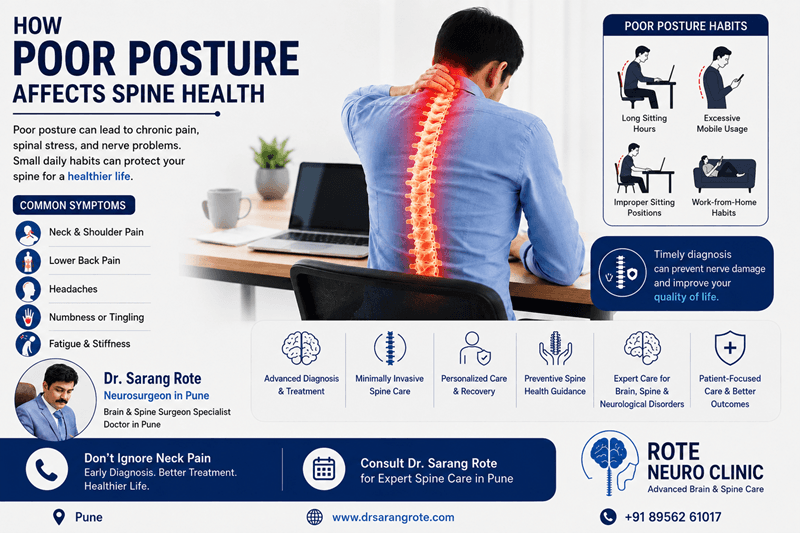
- Maintaining good posture
- Treating spinal conditions appropriately
- Seeking medical attention after significant spinal injuries
People with a history of cancer should also report new or persistent back pain or neurological symptoms to their healthcare team.
Recovery After Spinal Cord Compression Treatment
Recovery depends on:
- Cause of compression
- Duration of compression
- Severity of neurological symptoms
- Location of compression
- Type of treatment
- Overall health
Some patients may require rehabilitation after treatment.
Rehabilitation may include:
- Physiotherapy
- Strengthening exercises
- Walking rehabilitation
- Balance training
- Occupational therapy
- Neurological follow-up
Early treatment may help protect remaining neurological function, although recovery varies between individuals.
Frequently Asked Questions About Spinal Cord Compression
1. What is spinal cord compression?
Spinal cord compression occurs when pressure is placed on the spinal cord or nearby nerve structures because of conditions such as spinal stenosis, disc problems, tumors, infection or trauma.
2. What are the symptoms of spinal cord compression?
Symptoms may include neck or back pain, numbness, tingling, weakness, difficulty walking, balance problems and changes in bladder or bowel function.
3. What causes spinal cord compression?
Common causes include spinal stenosis, herniated discs, bone spurs, tumors, infections, trauma and certain spinal alignment or bone conditions.
4. Can a spinal tumor cause spinal cord compression?
Yes. A spinal tumor can press on the spinal cord or nearby nerves and cause pain, weakness, numbness, balance problems or difficulty walking.
5. Can spinal stenosis cause spinal cord compression?
Yes. Spinal stenosis narrows the spaces inside the spine and can place pressure on the spinal cord or nerves.
6. Is spinal cord compression always an emergency?
No. The urgency depends on the cause and progression. Chronic degenerative compression may develop gradually, while acute trauma, infection, tumor-related compression or rapidly worsening neurological symptoms may require urgent treatment.
7. What are the emergency warning signs?
Rapidly worsening weakness, new difficulty walking, loss of bladder or bowel control, difficulty passing urine or new numbness around the genital or anal area require urgent medical assessment.
8. Is MRI needed for spinal cord compression?
MRI is an important investigation because it can show the spinal cord, nerves, discs, tumors, infection and other causes of compression in detail.
9. Does spinal cord compression always require surgery?
No. Treatment depends on the cause and severity. Some chronic degenerative conditions may initially be managed without surgery, while significant or progressive compression may require decompression or another intervention.
10. What is decompression surgery?
Decompression surgery aims to remove or reduce the structure causing pressure on the spinal cord or nerves and create more space for the affected neurological structures.
11. Can spinal cord compression be treated with minimally invasive surgery?
Selected patients may be candidates for minimally invasive or endoscopic procedures. Suitability depends on the cause, location, severity and spinal anatomy.
12. Can spinal cord compression cause paralysis?
Severe or untreated spinal cord compression can result in significant neurological impairment, including loss of movement. Early assessment is important when neurological symptoms are progressing.
13. Can spinal cord compression affect bladder and bowel function?
Yes. Significant compression can interfere with the nerves controlling bladder and bowel function. New bladder or bowel dysfunction is an important warning sign requiring urgent evaluation.
14. Who should I consult for spinal cord compression in Pune?
Patients with suspected spinal cord compression should be evaluated by an appropriate spine or neurosurgical specialist. Dr. Sarang Rote is a Consultant Neurosurgeon & Neurointerventionist in Pune with experience in spinal trauma, brain and spine tumors, microscopic spine surgery and endoscopic spine surgery.
Conclusion
Spinal cord compression is a condition in which pressure on the spinal cord or nearby nerves can cause pain, numbness, weakness, balance problems and difficulty walking.
It can result from spinal stenosis, disc problems, tumors, infections, trauma and other spinal conditions.
Not every case requires emergency surgery, but rapidly worsening neurological symptoms, severe weakness, new bladder or bowel problems or numbness around the genital or anal region require urgent medical assessment.
Diagnosis usually involves a neurological examination and appropriate imaging, with MRI playing an important role in evaluating the spinal cord and surrounding structures.
Treatment depends on the cause and may include medicines, radiation therapy, infection treatment, decompression surgery, spinal stabilisation or selected minimally invasive procedures.
Early diagnosis and appropriate treatment are important because prolonged or severe compression can result in permanent neurological damage.
If you are experiencing persistent back or neck pain together with numbness, weakness, walking difficulties or other neurological symptoms, seek an appropriate specialist evaluation.











.jpeg)